Concept
What Is Senzaicha (仙齊茶)?
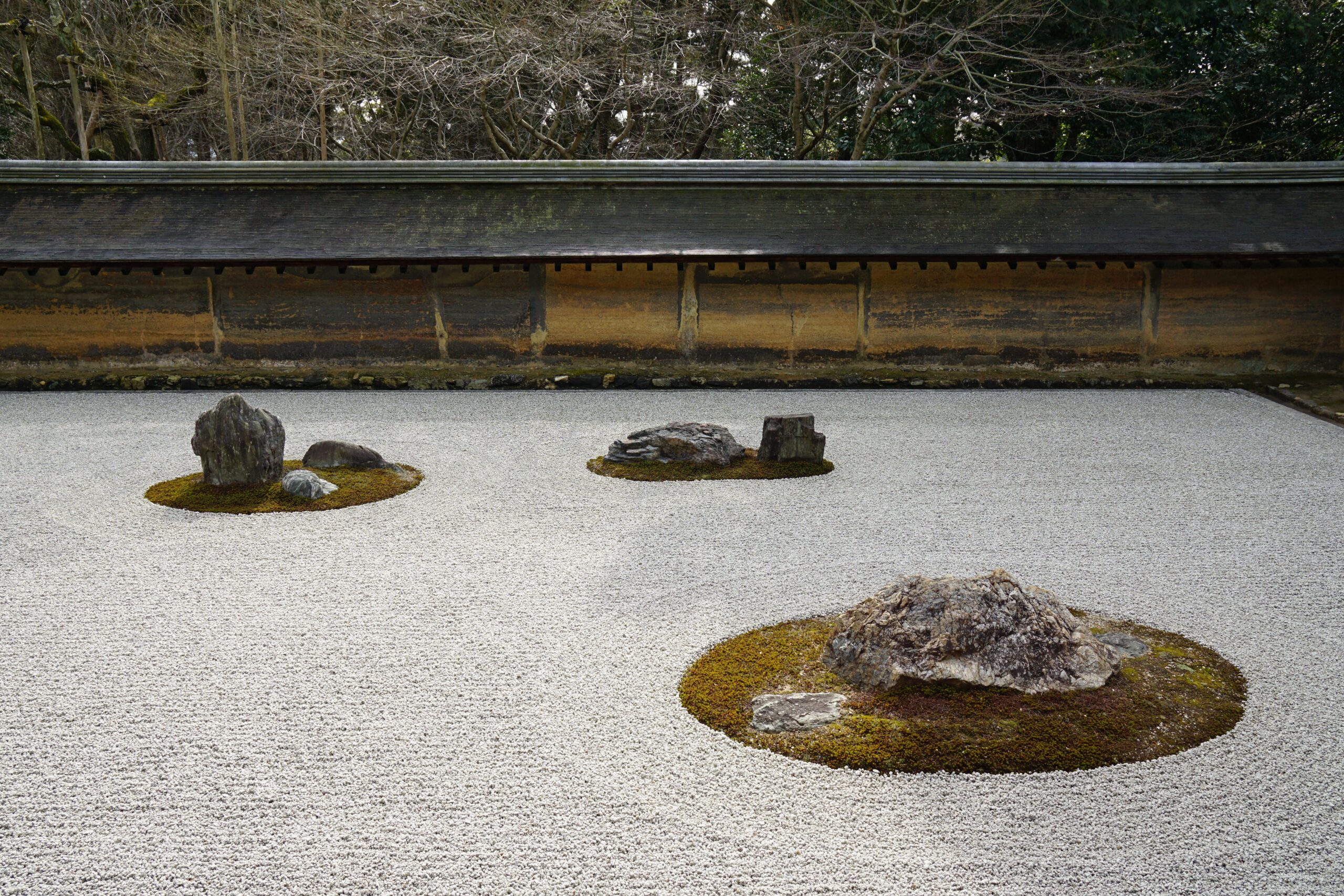
Senzaicha is not a color name clearly defined within a specific era or formal system.
Rather, it is closer to a color that has quietly existed beneath the surface
of Japanese aesthetic sensibility—
a color that predates naming itself.
Though it is an extremely dark tone, close to black,
it contains within it subtle traces of green and brown,
holding a deeply sunken sense of stillness.
It is not a color that asserts itself.
At first glance, it is perceived almost as black,
yet depending on the quality of light, the viewer’s distance,
and the passage of time,
a faint warmth of brown or a hint of green slowly emerges.
It is, in this sense, a “color that appears belatedly.”
Senzaicha is not a color that is complete on its own.
It gains meaning through its relationship with surrounding colors,
materials, and the context in which it is used.
In garments, furnishings, Japanese painting, and craft,
it has functioned as a “ground color” that allows the principal hues to stand out,
imparting a quiet tension and a sense of temporal depth to the whole.
Nor does this color speak of novelty or brilliance.
It deepens through use, settles, accumulates,
and embraces even change and deterioration within itself.
Senzaicha is not the color of a single moment,
but a color that contains time itself.
Its ambiguity—seen as black by some, brown by others, or green by still others—
is precisely its essence.
Not a fixed color,
but a state of quiet, enduring presence rendered as color.
Senzaicha is a restrained visualization
of a distinctly Japanese sense of silence and time.
Context
Its Use in Ancient Japan

Senzaicha was not a systematized color name like the
kasane no irome used in Heian-period court attire.
Yet its tone was quietly employed in garments and furnishings
as a “ground color” that supported the principal hues.
Though close to black, with subtle traces of green and brown,
it served to tighten the visible palette
and impart calmness and a sense of temporal depth to the whole.
Senzaicha was not a color meant to be displayed,
but one that allowed a space or presence to come into being.
From the medieval period onward, within warrior culture and the world of tea,
tones akin to Senzaicha deepened in association with values such as
wabi and sabi.
Stripped of flamboyance and novelty,
these colors harmonized with well-used utensils
and spaces shaped by the passage of time,
embodying a sensibility that embraced even change and deterioration as beauty.
Senzaicha is a color that contains not the moment of completion,
but the very process of deepening through time.
In narrative picture scrolls and traditional Japanese painting,
colors resonant with Senzaicha were used for pine trunks,
the shadows of bamboo, the ground beneath, and background planes.
They were not colors chosen to replicate nature,
but colors intended to convey atmosphere, stillness,
and the flow of time within a scene.
Neither black nor green,
their ambiguous tonality maintains harmony across the image,
while slowly shifting in meaning according to the viewer’s perception.
Senzaicha is not a color that depicts the subject itself,
but a chromatic expression that renders visible
the time flowing behind it.
Layering
A Color That Exists Through Layers
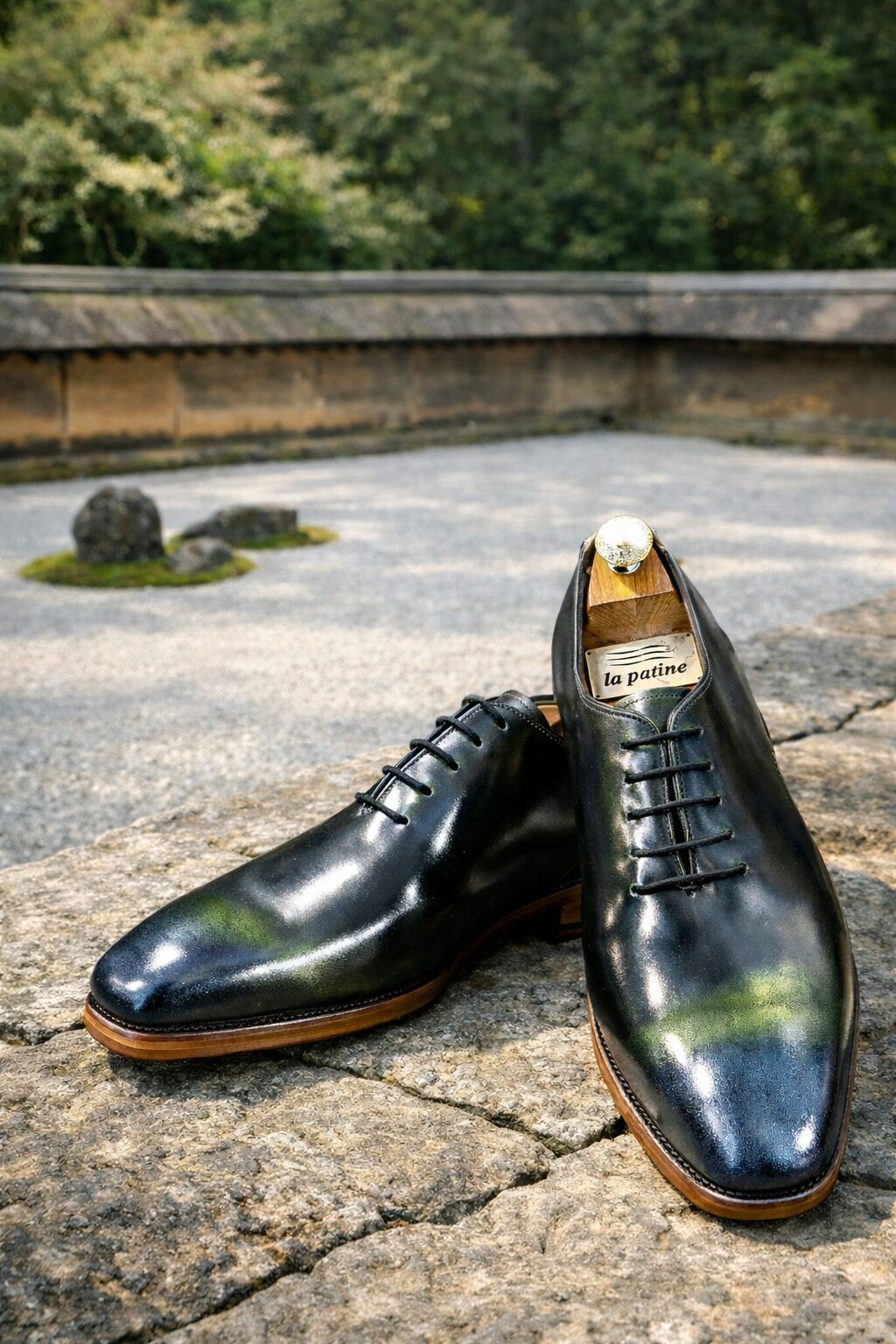
Senzaicha is not a color that exists as a single hue.
While it is perceived on the surface as a tone close to black,
it contains within it subtle traces of green and brown.
Only through the quiet accumulation and overlapping of these elements
does its true character begin to emerge.
For this reason, Senzaicha is not a color that reveals itself immediately.
It appears belatedly, shaped by conditions such as light, distance, and time.
It is not a color that captures a single moment,
but one in which the passage of time itself becomes visible as layers—
a color that exists, fundamentally, as accumulation.
Palette
Color Composition
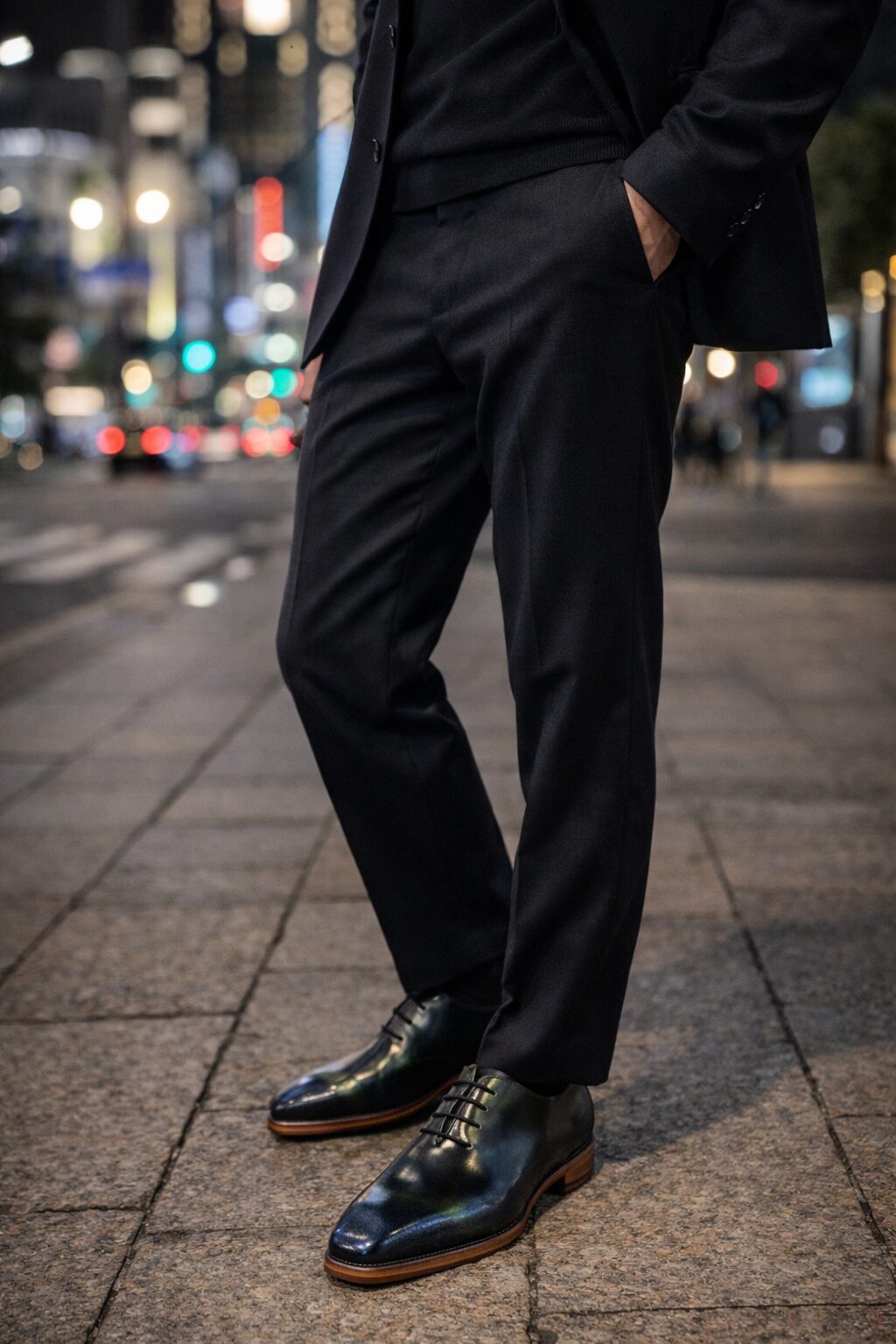
The foundation of Senzaicha is a deep, near-black darkness.
At first glance, it may be mistaken for pure black,
yet this darkness is not entirely achromatic.
It retains a subtle latitude—an inner looseness—
within which faint traces of color reside.
This restrained darkness supports the overall stillness
and quiet tension of the palette.
Beneath the dark surface lie overlapping layers
of brown reminiscent of dry earth,
and green that recalls moss or evergreen foliage.
These tones never separate into distinct colors;
they are held in restraint,
revealing themselves only through shifts in light
or changes in the viewer’s gaze.
It is precisely this ambiguous layering
that gives Senzaicha its depth.
Another defining element of Senzaicha
is a barely perceptible hint of silver.
This silver does not exist as a color in itself,
but appears momentarily as reflection,
emerging from the contours of the leather
or through the act of polishing.
This muted, achromatic light
grants the dark tone not rigidity,
but a quiet sense of spatial depth.
Meaning
Symbolism
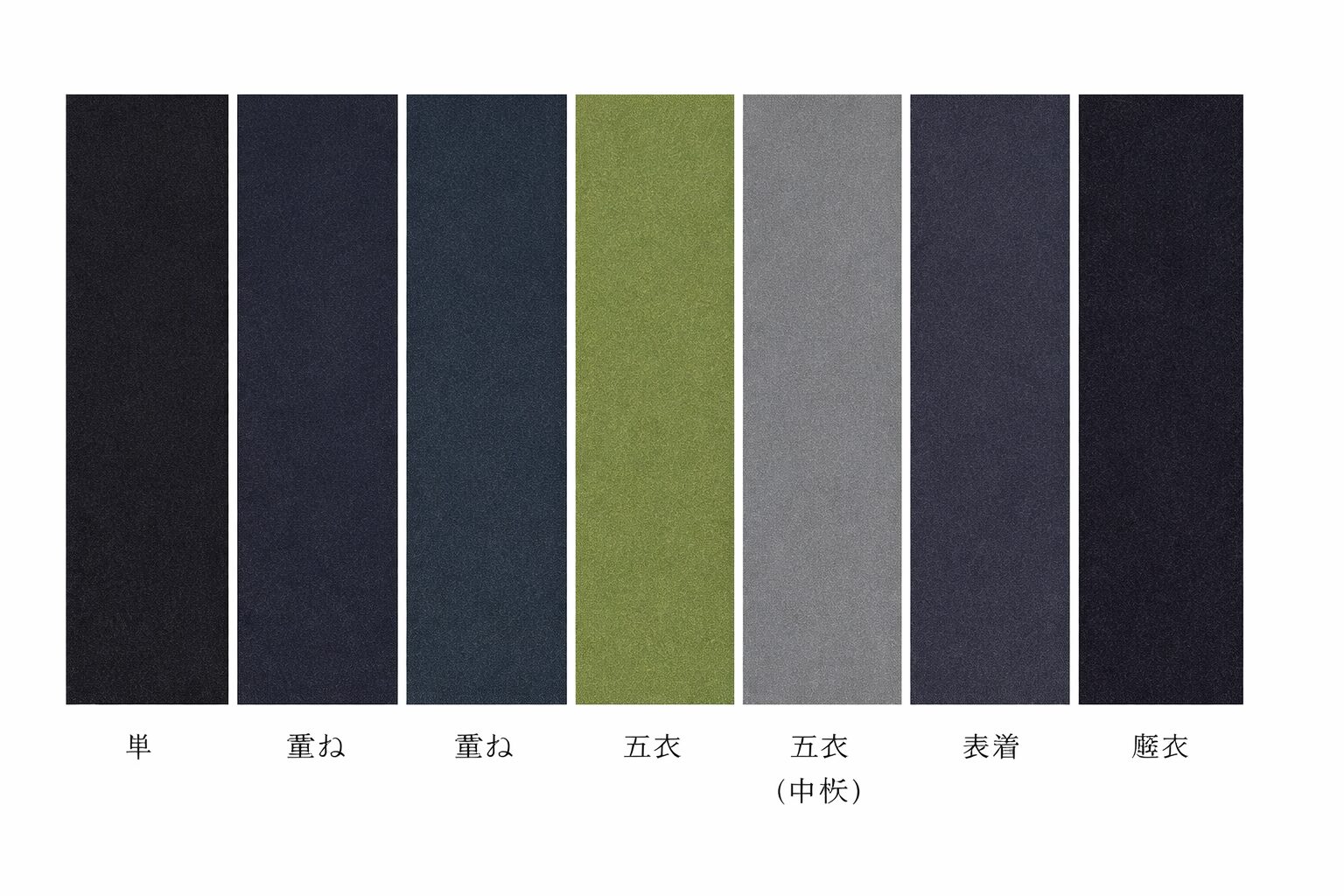
| The Power of Silence | A strength that supports a space or subject quietly, without asserting itself. Senzaicha functions not as a color that demands attention, but as one that allows the whole to exist in balance. |
|---|---|
| The Accumulation of Time | A sensibility that embraces time itself, rather than a fleeting moment of beauty. It symbolizes a distinctly Japanese value system in which completion is achieved through use and age. |
| Meaning Through Layering | A color structure formed by the inseparable overlap of black, brown, and green. Rather than a single hue, meaning emerges through layers— an expression of a uniquely Japanese approach to color. |
| Resonance with Wabi and Sabi | An aesthetic that rejects ostentation and accepts imperfection and change. Senzaicha is deeply connected to the spirit found in warrior culture and the tea ceremony. |
| A Beauty That Lives with Time | A concept of beauty that does not fix itself at a single, completed state, but assumes continual change. Senzaicha symbolizes not merely a color, but a way of being that lives alongside time itself. |
Time
Depth of Time — The Transience Contained in Senzaicha
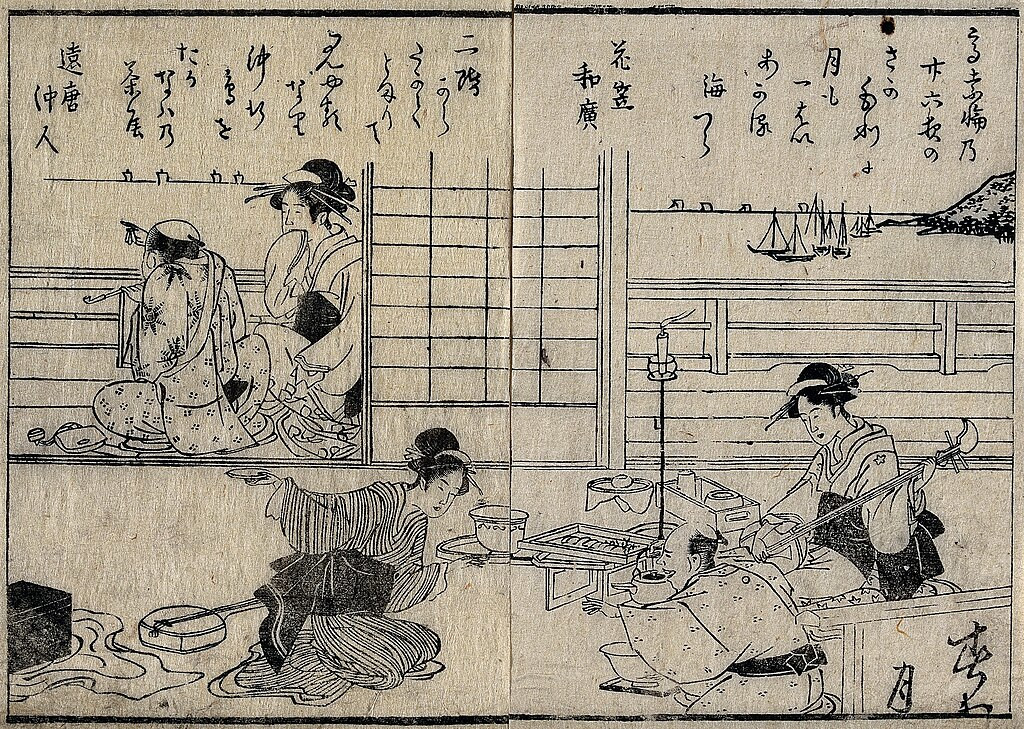
Utamaro Kitagawa, A scene in a Japanese tea house
Courtesy of Wellcome Collection
Licensed under CC BY 4.0
Senzaicha is not a color that symbolizes a specific season.
It is a color in which time itself has been allowed to settle,
unbound by spring, summer, autumn, or winter.
Rather than expressing newness,
it quietly contains layers of accumulated time.
When first used, Senzaicha appears almost black.
Yet as it receives light, is touched, and is lived with,
its darkness gradually loosens,
allowing hints of green and brown to emerge from within.
This is not so much a change of color,
as it is a process in which time that was always inherent
slowly seeps to the surface.
In this way, Senzaicha has no single point of completion.
It deepens with age, grows calm,
and eventually returns once more to silence.
This cycle itself constitutes the essence of the color.
Senzaicha is not a color that captures a moment,
but one that exists to receive
**the flow of time itself**.