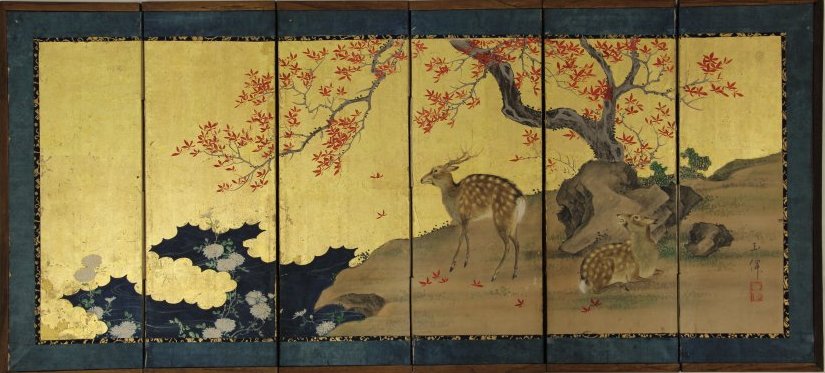
Image courtesy of Morikami Museum and Japanese Gardens
Concept
What Is Akakuchiba (赤朽葉)
Akakuchiba is a traditional Japanese color that represents the reddish-brown hue of autumn leaves at the very moment before they decay and return to the earth. It is neither a simple brown nor a mere “faded” tone. Instead, it retains a subdued trace of its former crimson brilliance beneath a calm, muted surface—a color that carries red within its decay. Aka-kuchiba does not symbolize death or loss. Rather, it captures a fleeting instant within the natural cycle—the transition from fullness to dissolution—a moment long regarded in Japanese aesthetics as profoundly beautiful.
Context
Historical and Cultural Context
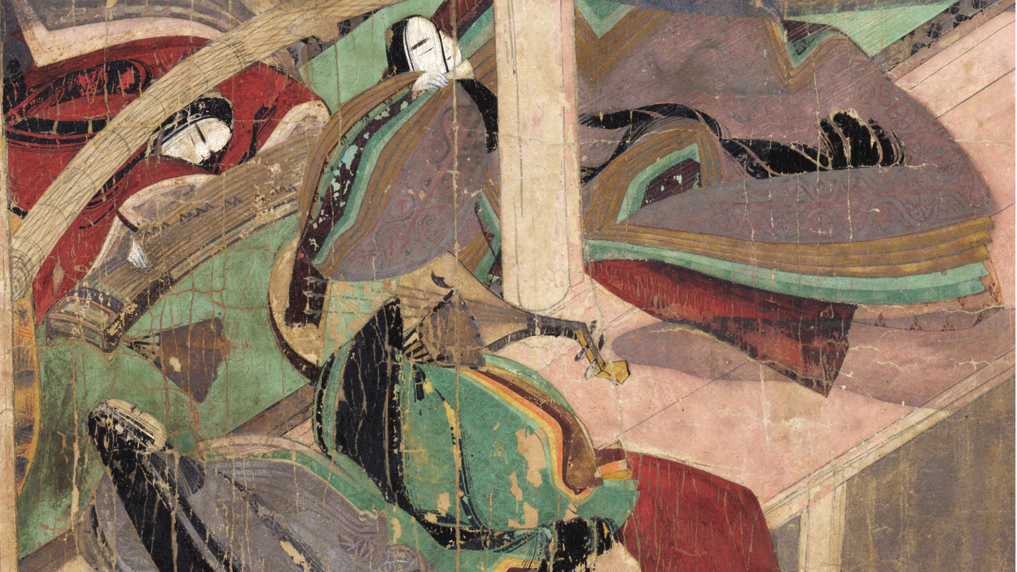
From the book Betsu Taiyo: The Tale of Genji
Plate: The Tale of Genji Emaki (National Treasure)
Heian period, 12th century
Collection: Tokugawa Art Museum
Image on pp.62–63
Akakuchiba is deeply connected to the Heian-period concept of kasane no irome—the art of layered colors in court dress. In autumn attire, layers of crimson, sappanwood red, and yellowish dyes were arranged so that the outermost color appeared subdued, while traces of red lingered beneath. This visual structure—muted on the surface, resonant within—embodies the essence of Akakuchiba. It reflects a refined sensibility that valued afterglow over brilliance, and restraint over display.
From the Kokin Wakashū onward, autumn in Japanese poetry was not merely a season of decline, but one of depth, maturity, and emotional resonance. Fallen leaves, fading colors, and landscapes tinged with quiet melancholy were perceived not as dull or lifeless, but as deeply evocative. The color sensed in these poetic landscapes aligns closely with Akakuchiba—a hue not meant to arrest the eye, but to be felt inwardly.
From the Kamakura through Muromachi periods, artisans increasingly employed layered plant dyes—such as sappanwood, madder, and kariyasu—to intentionally soften vivid colors. In textiles, paper, lacquerware, and eventually leather, subdued reddish-browns resembling Akakuchiba came to signify refinement, dignity, and depth. Over time, intentionally composed “Akakuchiba–inspired” tones became established as colors that enhanced the quiet authority of garments, furnishings, and crafted objects.
Layering
A Color of Afterglow — Red Held Within Restraint
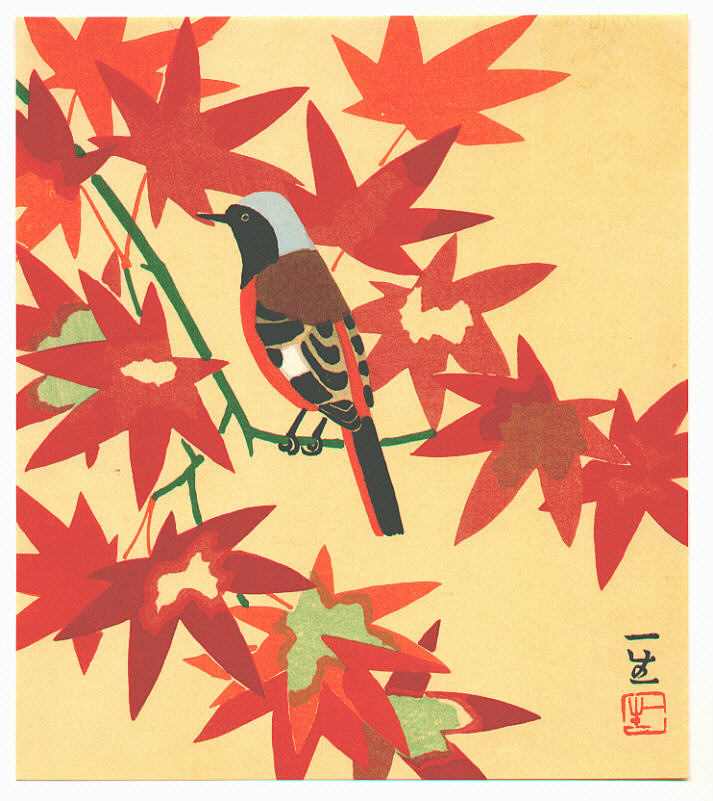
Japanese woodblock print, early 20th century
Akakuchiba is defined not by loud redness but by what remains beneath. Its surface is calm and muted, yet a trace of former crimson persists within—an “afterglow” rather than a display.
This structure mirrors kasane no irome: colors are composed so that meaning emerges through layers, where what is concealed can be as expressive as what is shown.
Palette
Color Composition
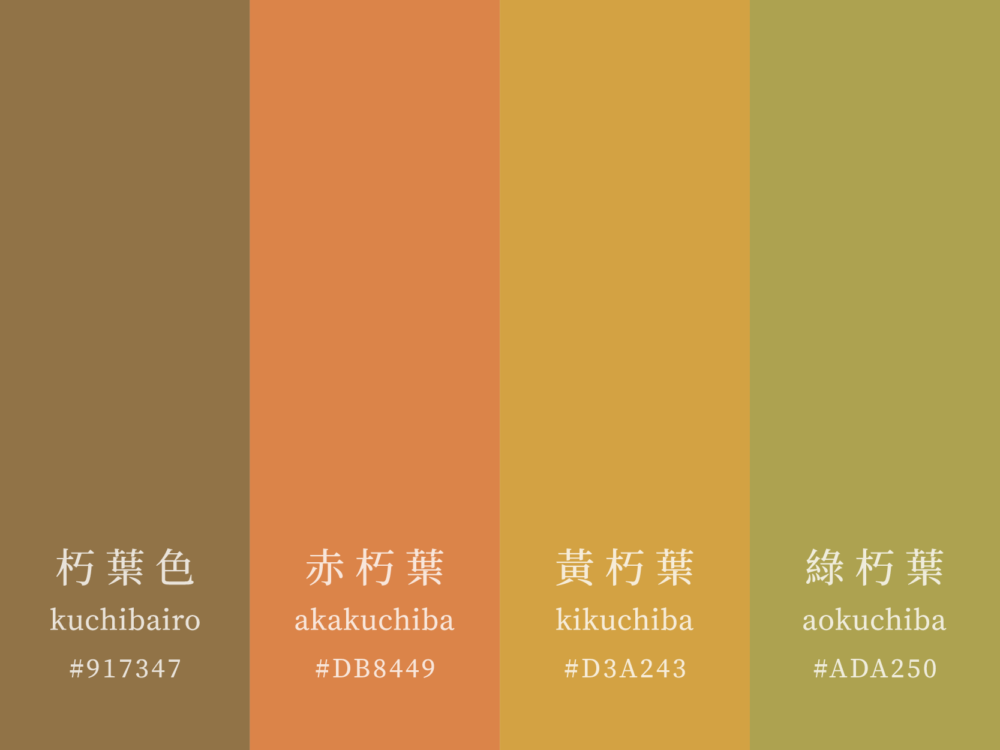
Image courtesy of JX Apprentice / Color Apprentice
A brown formed at the threshold between leaf and soil— a color balanced between yellow and brown, conveying warmth and organic calm.
A faint presence of red or vermilion remains beneath the surface, echoing the leaf’s former brilliance. This restrained red is the defining feature that distinguishes Akakuchiba from ordinary earthy tones.
Subtle darkness and grayish nuance are introduced through time and aging, creating a warm color with quiet gravity and dimensional depth.
Conclusion
Conclusion
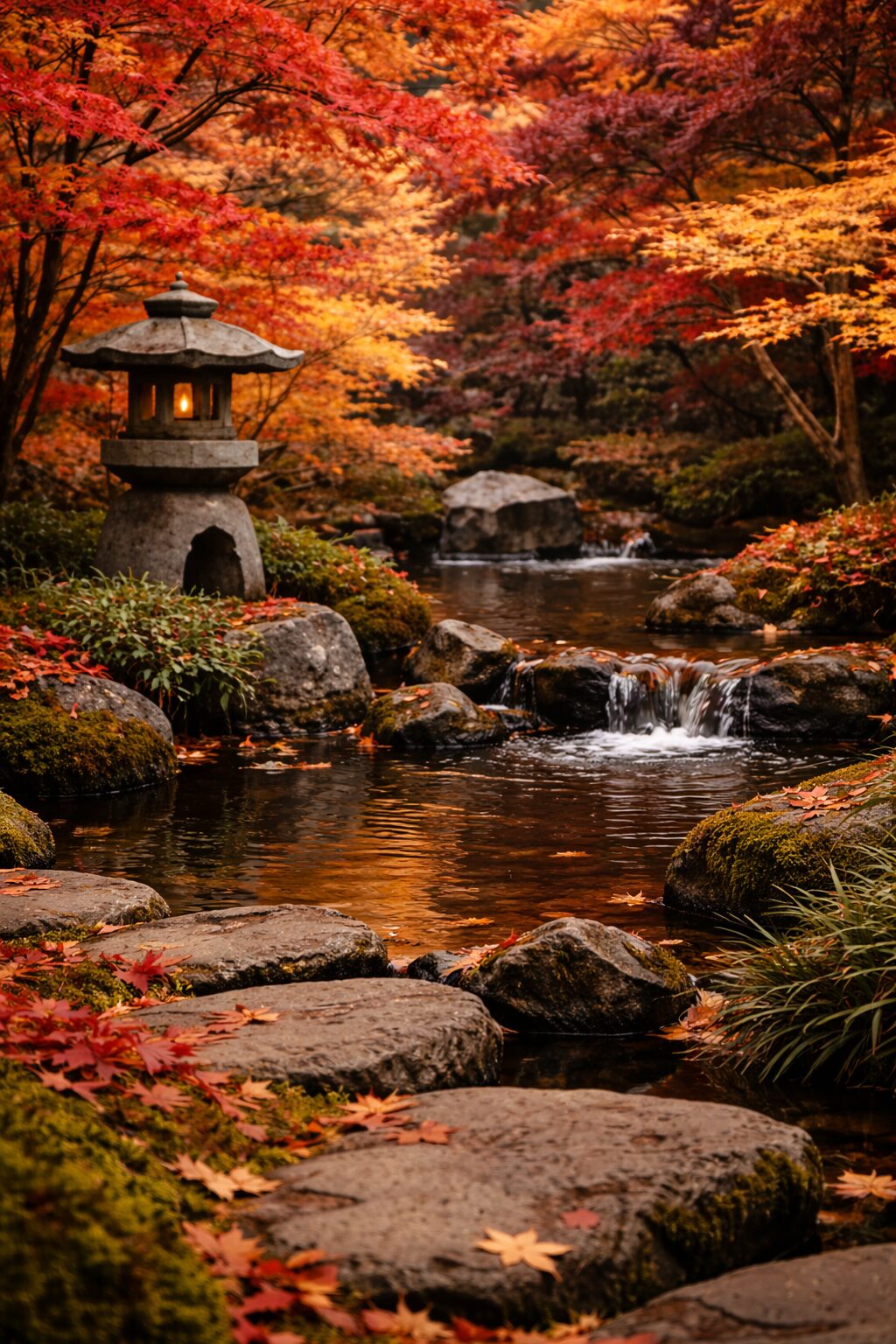
Akakuchiba is a color born from the Japanese ability to perceive beauty within transition. Emerging from courtly dress, classical poetry, and centuries of craft tradition, it represents not decline, but depth attained through time.
In contemporary contexts—whether in attire, interiors, craft, or patinated leather—Akakuchiba continues to function as a color that does not assert itself, yet leaves a lasting presence. It stands as a quiet testament to a cultural philosophy that embraces change, honors memory, and finds elegance in what gently remains.