Why the Japanese Language Has One of the World’s Richest Color Vocabularies
Japan’s extraordinary abundance of color names is no coincidence. It is the result of more than a millennium of cultural refinement, linguistic adaptability, aesthetic sensitivity, and a richly varied natural environment. In essence, Japan was inherently predisposed to develop an exceptionally dense and nuanced color lexicon. Below are the key factors, presented as an integrated structure.1. A Climate of Four Distinct Seasons Cultivated Fine Color Perception
Japan’s seasonal transitions are unusually clear and sharply defined. High humidity, mountainous terrain, and diverse vegetation generate countless subtle variations in natural color throughout the year. Even cherry blossoms—often described simply as pink in other languages—are distinguished in Japanese by multiple refined terms: • sakura-iro • usu-zakura • ikkon-zome • taikō • kōbai-iro This habit of close observation led naturally to naming even the most delicate shifts in hue.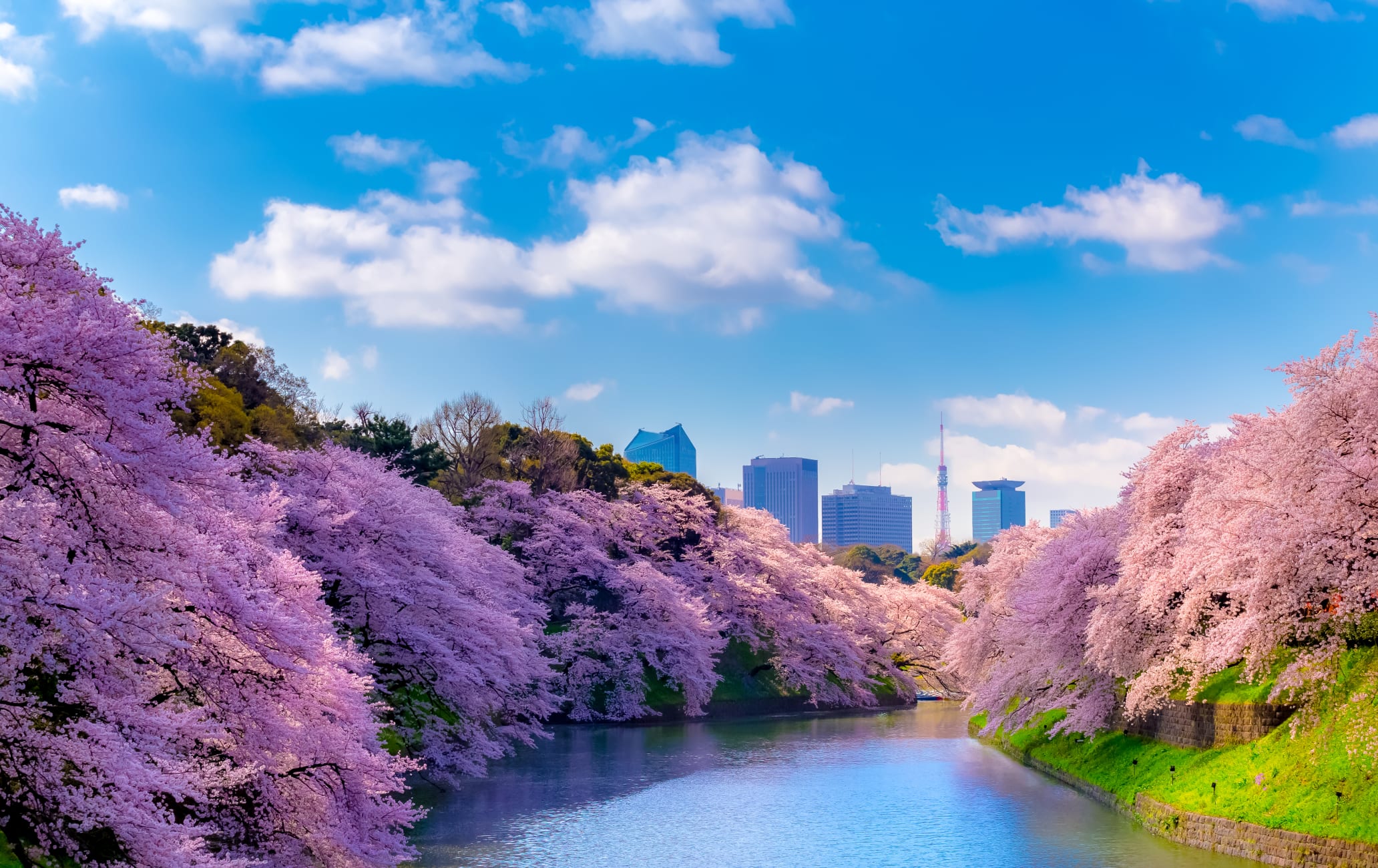
2. Heian Court Culture Systematized Color as an Aesthetic Language
The most decisive period in the expansion of Japan’s color vocabulary was the Heian era (8th–12th century). Within the aristocratic court: • Layered garments (kasane no irome) expressed seasonality and refinement • Specific hues signified rank, elegance, and social standing • Poetry and literature treated color as a core expressive element Color was not merely visual—it carried symbolic, cultural, and social meaning. Once codified, this system endured for centuries, allowing color terminology to flourish.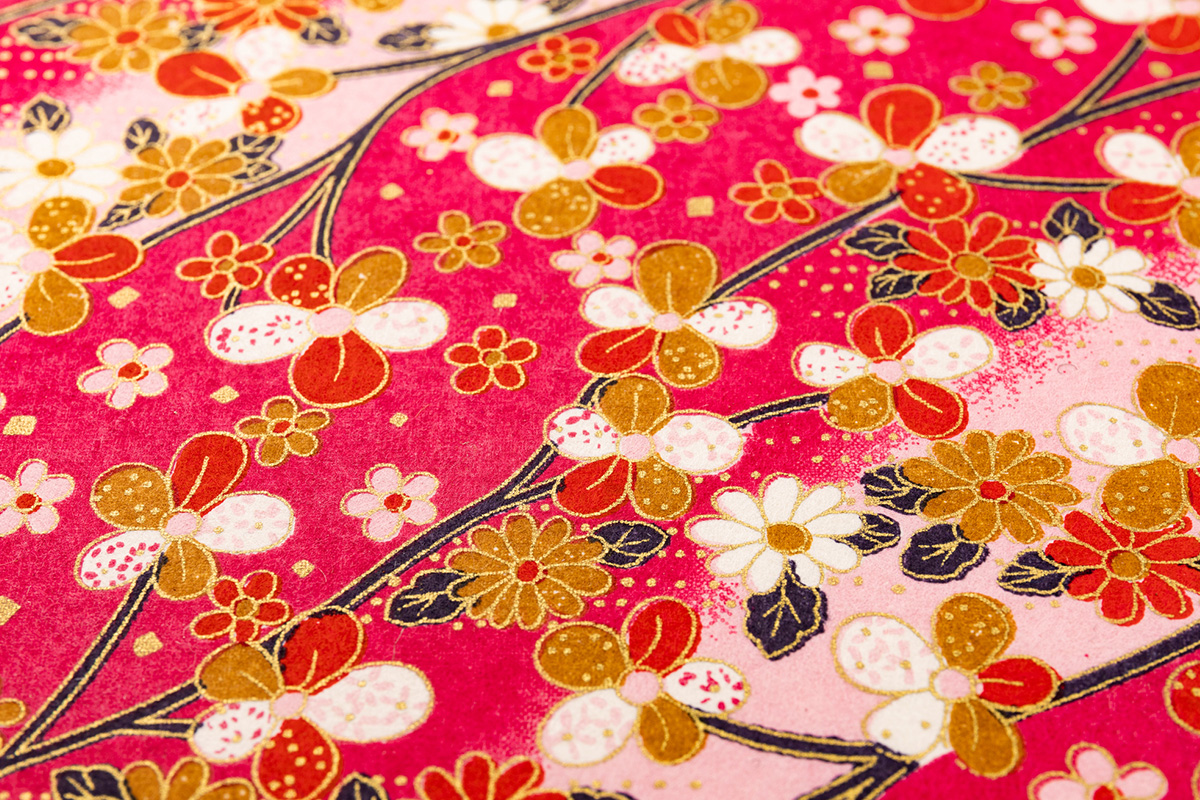
3. Advanced Dyeing Traditions Generated Infinite Gradations
Historically, Japan possessed world-class dyeing techniques and access to a wide range of natural dyes, including: • Indigo (ai) • Madder (akane) • Amur cork tree (kihada) • Sappanwood (suō) • Walnut (kurumi) • Ginkgo • Purple gromwell (shikon) • Kariyasu grass • Bamboo-derived dyes Each dye produced numerous tonal variations depending on concentration, mordants, and process. More dyes led to more gradations— and more gradations demanded more names.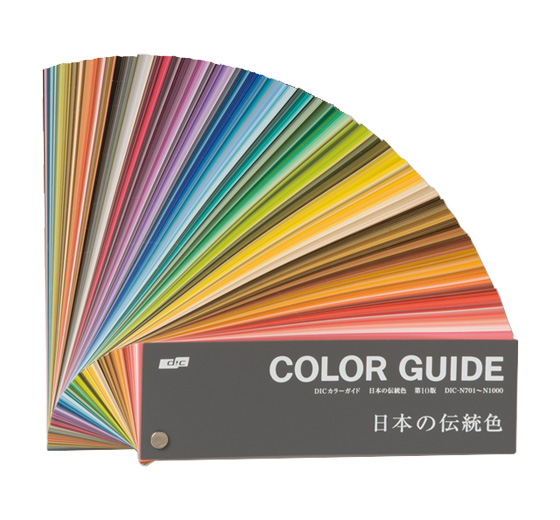
4. The Japanese Language Enables Image-Based Color Naming
Japanese readily transforms metaphorical and nature-based imagery into independent color identities. Examples include: • wakakusa-iro — young spring grass green • tsuyukusa-iro — dayflower blue • sora-iro — sky blue • kuchiba-iro — fallen autumn leaves In English, such expressions often remain descriptive phrases. In Japanese, they become established color categories. This linguistic flexibility accelerates the creation of new color names.5. Edo Popular Culture and Modern Design Expanded the Palette Further
During the Edo period, color vocabulary entered everyday life through: • Ukiyo-e prints • Kimono culture • Increasingly sophisticated dyeing techniques Systems such as Shijūhatcha Hyakunezumi (“Forty-Eight Browns and One Hundred Grays”) illustrate the remarkable depth of color differentiation. In modern times, Western pigments and fashion terms—beige, mauve, coral, mustard—were seamlessly absorbed into Japanese usage.6. Color Carries Emotional, Literary, and Philosophical Meaning
In Japan, colors often express: • Emotional nuance • Seasonal transition • Literary imagery • Buddhist metaphysics • Aesthetic ideals such as wabi-sabi and mono no aware Pale cherry-blossom tones evoke impermanence; muted grays suggest quietude, introspection, and transience. Such symbolic depth naturally multiplies recognized color distinctions.Conclusion — Chapter 1
Japan’s vast color vocabulary emerged from the convergence of: 1. A richly varied natural environment 2. Heian court traditions that formalized color aesthetics 3. Advanced dyeing technology 4. A language suited to imagery-based naming 5. Cultural evolution from the Edo period to modernity 6. Deep emotional and philosophical associations with color Together, these elements formed one of the world’s most culturally layered color lexicons.Why Japan’s Four Seasons Are Considered Especially Beautiful
Japan’s seasons are admired worldwide because geography, biodiversity, cultural practice, and aesthetic values overlap to create vivid, emotionally resonant transitions.
1. Geography Creates Dramatic Seasonal Contrast
Japan spans multiple climate zones.
The interaction of:
• the warm Kuroshio Current
• the cold Oyashio Current
• steep mountainous terrain
produces striking seasonal identities.
Spring’s advancing cherry blossom front,
summer’s lush humidity,
autumn’s crisp air and vivid foliage,
and winter’s contrast between snowy coasts and clear skies
define the rhythm of the year.
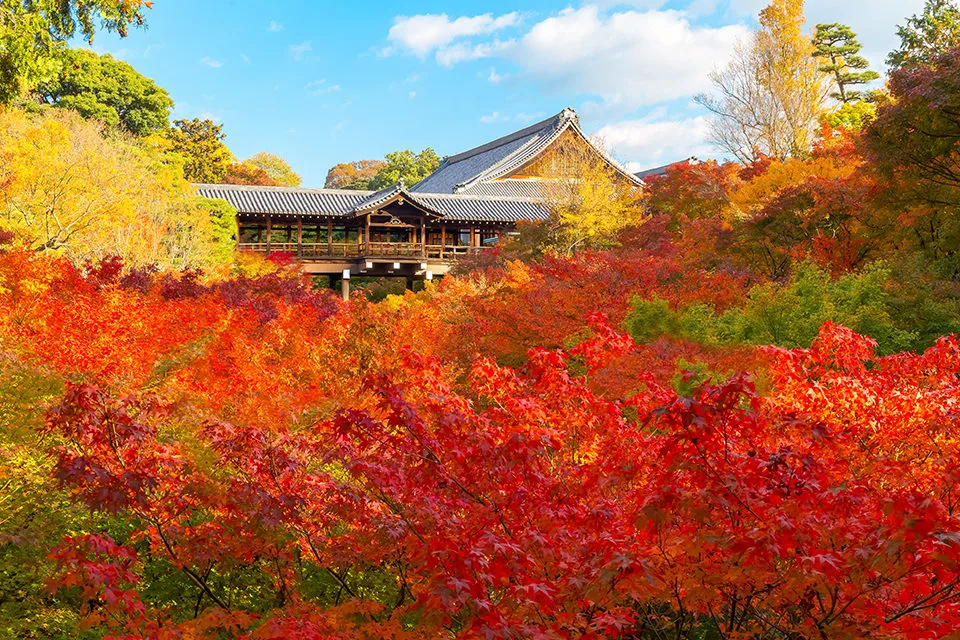
Source: Source: Trip.com (image served via Tripcdn.com)
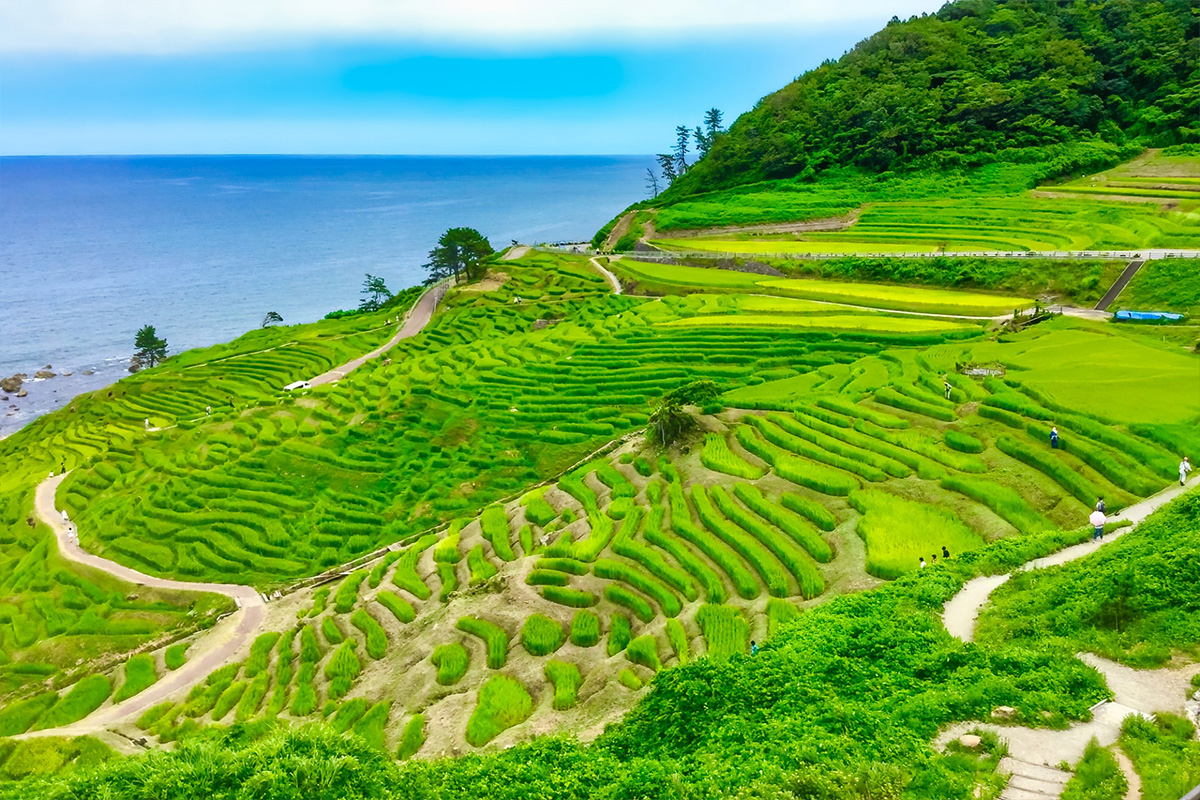
Source: Kodawari Times
https://kodawari-times.net/regions-in-japan/shiroyone-senmaida-rice-terraces/
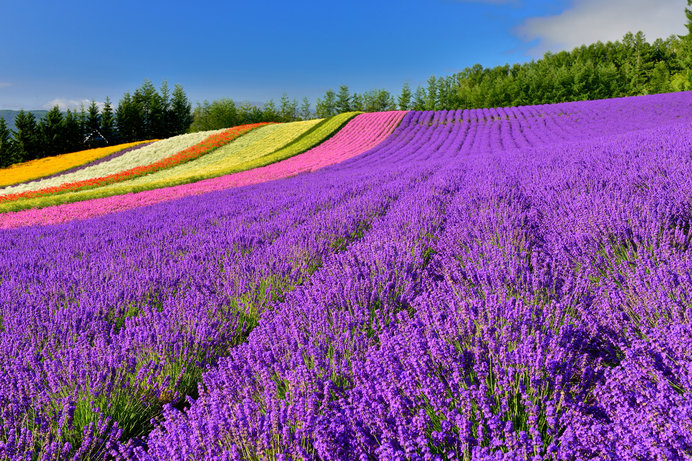
2. Seasonal Awareness Is Embedded in Daily Life
Seasons shape Japan’s:
• annual festivals
• cuisine centered on seasonal ingredients
• poetry and haiku
• tea ceremony and garden design
• kimono colors and motifs
Even subtle changes are culturally acknowledged and celebrated.
3. Aesthetic Values That Embrace Transience
Concepts such as mono no aware and wabi-sabi frame nature through sensitivity to impermanence.
A fleeting cherry blossom or a quiet autumn dusk becomes a meaningful moment rather than a simple event.
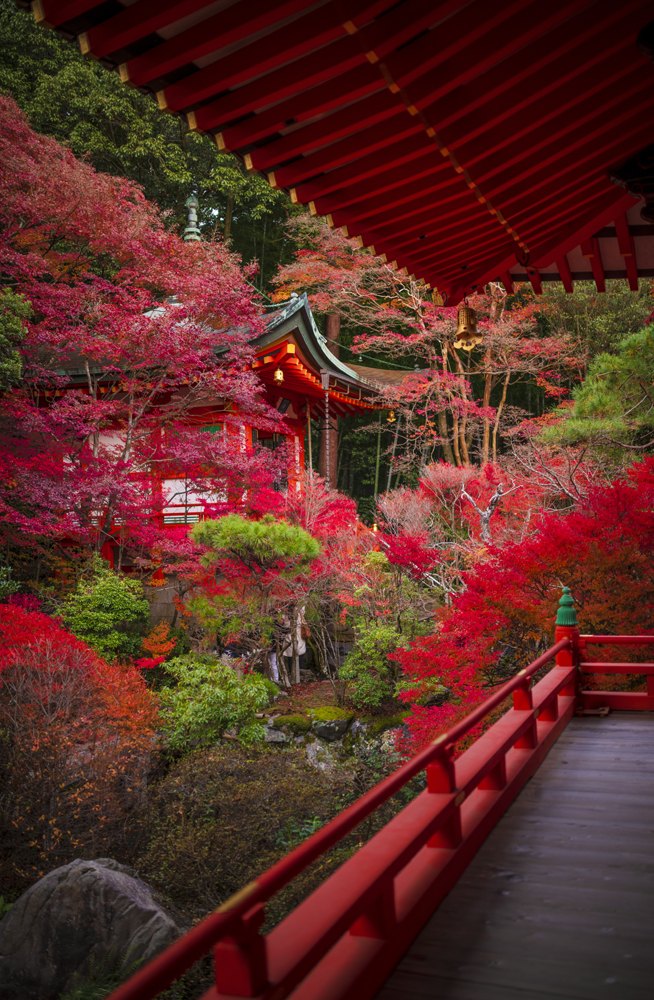
Source: Travel Caffeine – “Bishamondo Temple Review, Info & Tips”
https://www.travelcaffeine.com/bishamondo-temple-review-info-tips/
4. Biodiversity Amplifies Seasonal Color
Plum and cherry blossoms, fresh spring greens, deep summer foliage, crimson maples, golden ginkgo, and winter snowfields create a powerful visual narrative throughout the year.
5. Art and Literature Preserve Seasonal Beauty
From The Tale of Genji to Bashō’s haiku, seasonal imagery lies at the heart of Japanese literature.
Painting and ukiyo-e repeatedly portray the cycle of the year, reinforcing seasonal awareness across generations.
6. Cities Remain Close to Nature
Even major cities—Tokyo, Osaka, Kobe—offer daily contact with:
• cherry-lined streets
• mountains and coastlines
• occasional snowfall
Seasonal change remains immediate and personal.
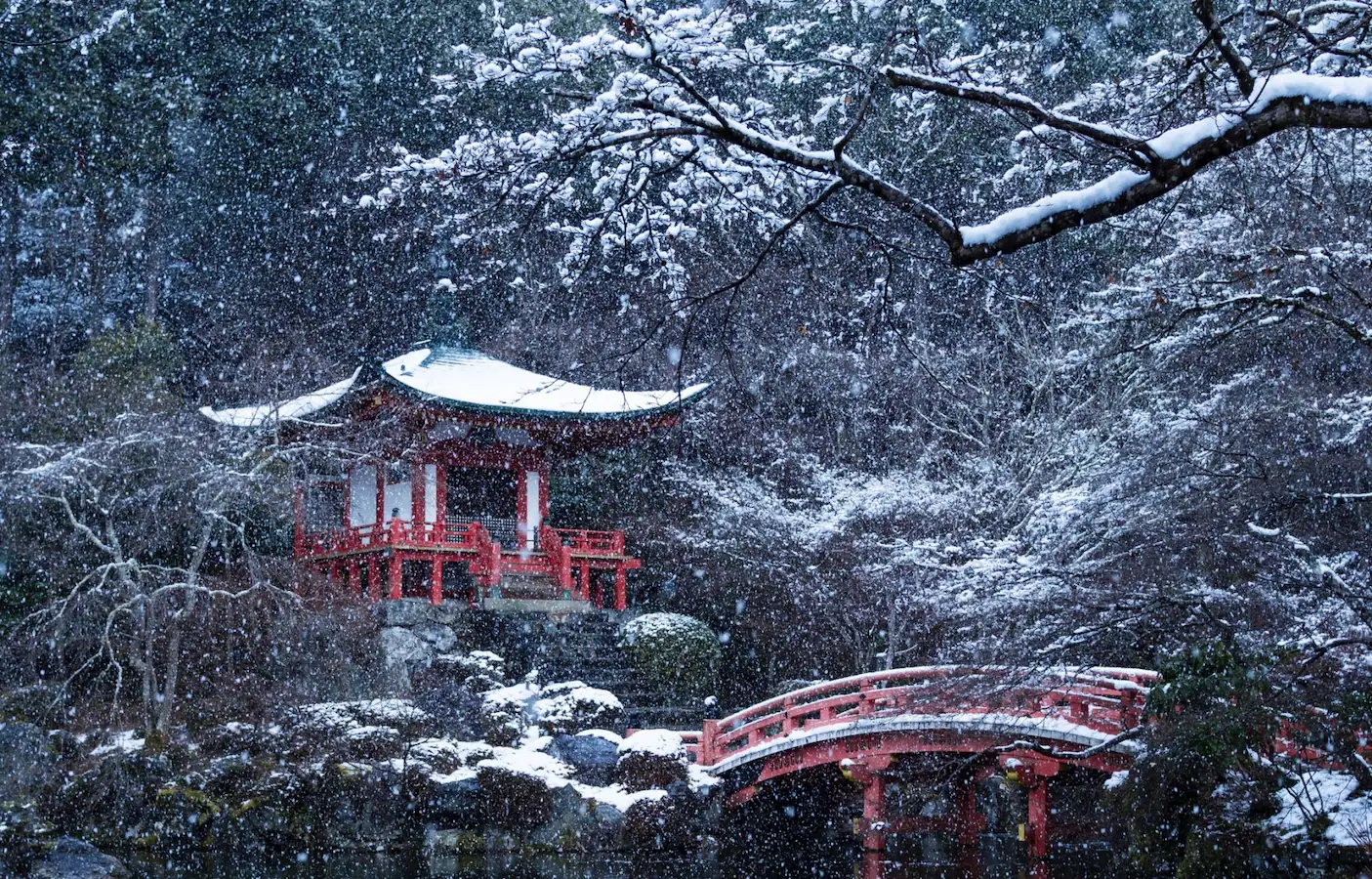
https://www.travelcaffeine.com/
Conclusion — Chapter 2
Japan’s seasons feel uniquely beautiful because nature, culture, aesthetics, history, and daily life converge into a single experiential rhythm.
Are Japan’s Four Seasons Shaped by Monsoons Originating in the Himalayas? — Yes.
Japan’s distinct seasonal patterns are strongly influenced by the Asian monsoon system, driven by the Himalayas and the Tibetan Plateau.
These vast landforms function as Asia’s climatic engine.
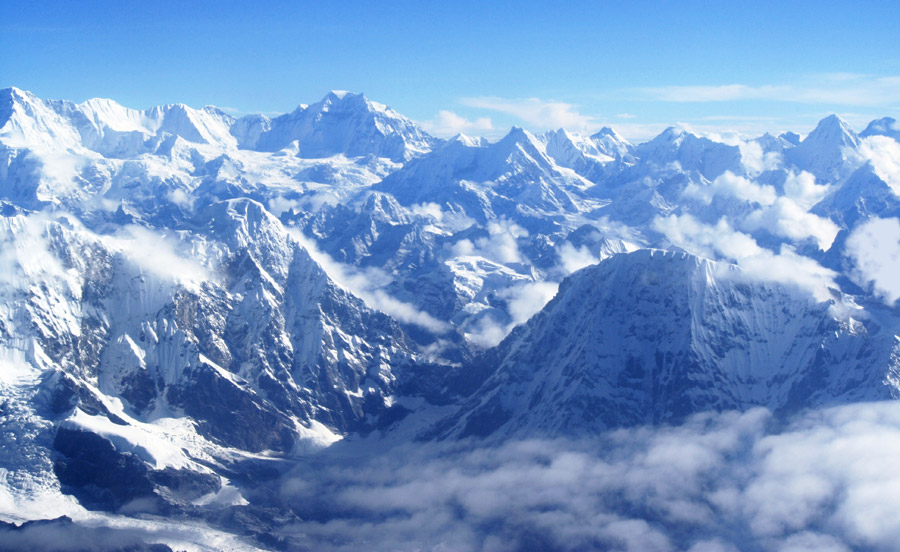
Image file: ヒマラヤ.jpg
1. How the Himalayas Generate the Asian Monsoon
Summer — Southwest Monsoon
• The Tibetan Plateau heats rapidly
• Rising air creates low pressure
• Moist air is drawn north from the Indian Ocean
Winter — Northwest Monsoon
• The plateau cools dramatically
• High pressure forms
• Cold, dry air flows toward East Asia
2. How This System Shapes Japan’s Seasons
• Spring: Transition from winter monsoon to warm southern air
• Summer: Humidity, heat, and the rainy season (tsuyu)
• Autumn: Retreat of moisture and clearer air
• Winter: Snowfall along the Sea of Japan and clear Pacific skies
Conclusion — Chapter 3
Without the Himalayas and the Tibetan Plateau, the Asian monsoon would be far weaker.
Japan’s climate would resemble a far more uniform temperate zone.
Japan’s celebrated seasons—
spring blossoms, lush summers, vivid autumns, and snowy winters—
are shaped, indirectly yet profoundly, by mountains thousands of kilometers away.