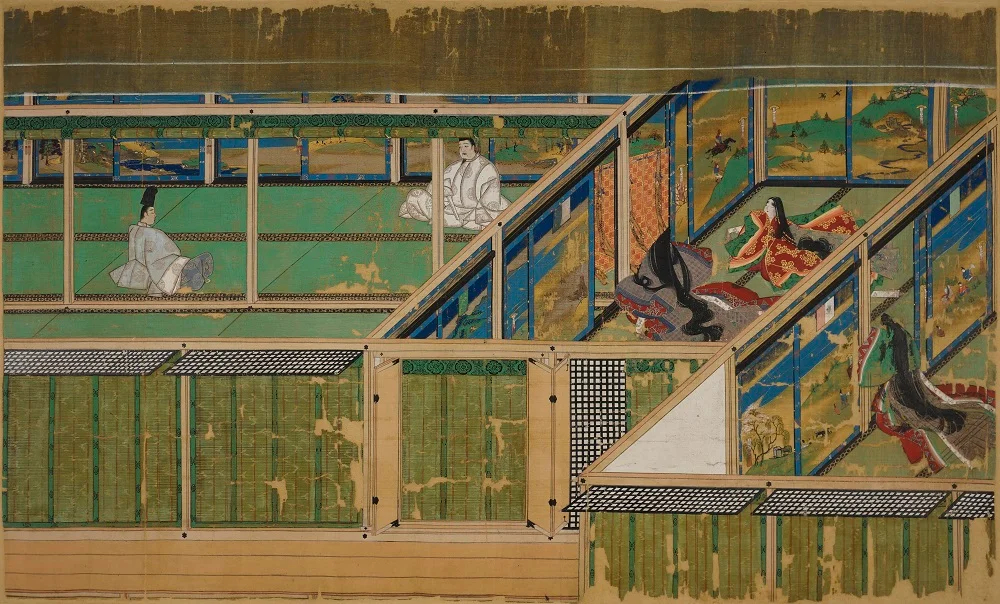
(Image referenced from artexhibition.jp)
Concept
What Is Yamabukikasane【山吹襲】?
Yamabukikasane is a color expression born from Heian-period court costume culture, inspired by the golden yellow of blooming yamabuki flowers in spring, layered with the subtle presence of young leaves and fresh green tones beneath. It is not a simple yellow; rather, it is defined by a layered construction in which a slightly red-tinged yamabuki yellow appears on the surface, while a soft, green-inflected pale tone is held underneath. Visually, it is perceived as “a gentle golden hue,” or “yellow suffused with light, through which a trace of green softly shows.” It is not a color that is complete in isolation, but one that acquires meaning only through layering, a principle central to its identity. Yamabukikasane is not a fixed or rigid color. Instead, it translates the temporal progression of spring itself—from flower to leaf—into chromatic form, embodying a uniquely Japanese sensitivity to seasonal transition.
Context
Use in Ancient Japan
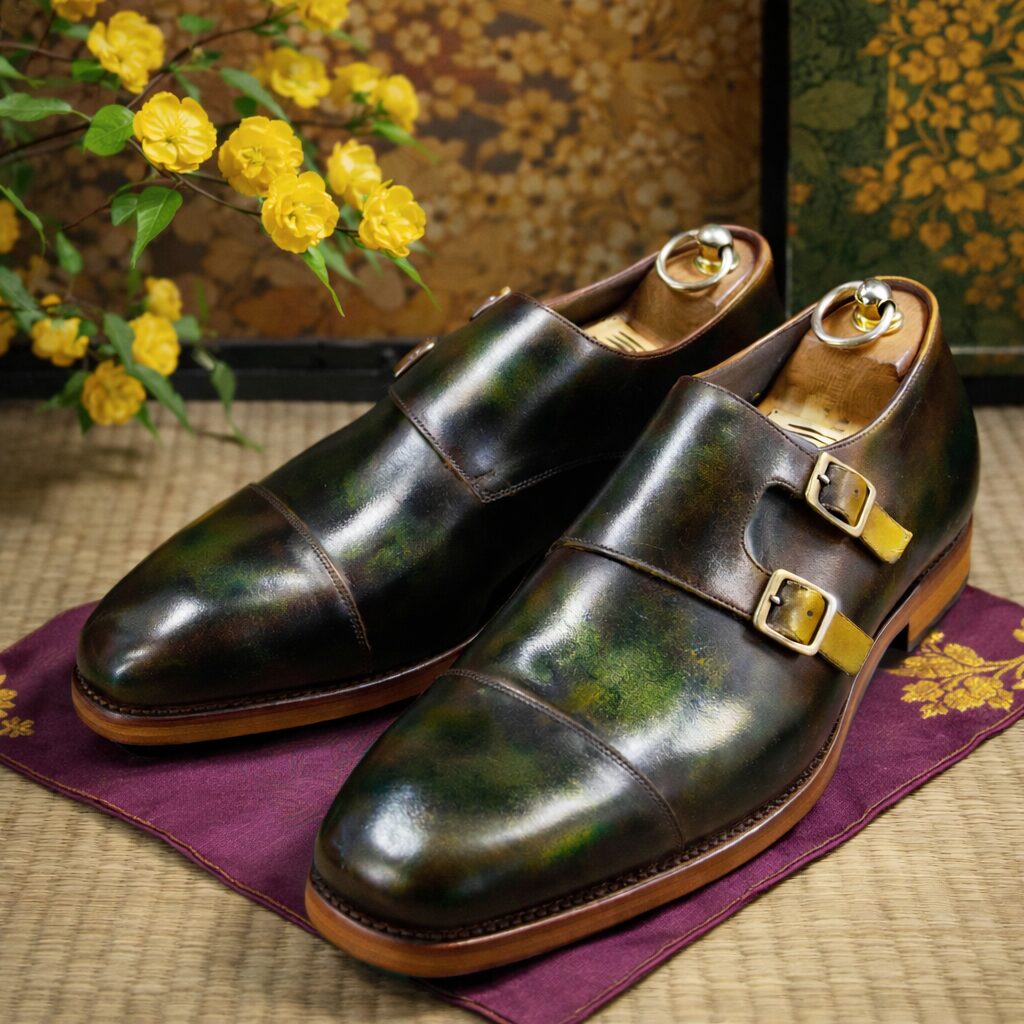
Yamabukikasane is one of the representative color combinations within kasane no irome, the system of layered colors formalized during the Heian period. It is understood as a visual expression of a spring landscape in which yamabuki blossoms are in full bloom while fresh leaves quietly emerge behind them, rendered through the overlapping layers of garments. The contrast between the brilliance of the visible yamabuki yellow and the calm green concealed beneath does not aim at naturalistic realism. Rather, it imbues court dress with a sense of season enriched by the passage of time, transforming clothing into a medium for seasonal expression.
In waka poetry and narrative literature, yamabuki flowers frequently appear as symbols of spring. Their color was not perceived merely as brightness or cheer, but as a hue that simultaneously conveys vitality and softness, characteristic of a season moving toward fullness. Yamabukikasane is therefore not the color of the flower alone, but a chromatic expression that encompasses flower, leaf, light, and time together, forming a poetic inner landscape rather than a literal depiction.
In illustrated handscrolls (emaki) from the late Heian through Kamakura periods, scenes set in spring often employ gentle overlays of yellow and green as their dominant palette. These choices are not botanical renderings, but rather color strategies designed to convey the atmosphere and progression of the season. They represent a visual unfolding of the same sensibility that underlies Yamabukikasane.
Layering
A Color That Exists Through Layers
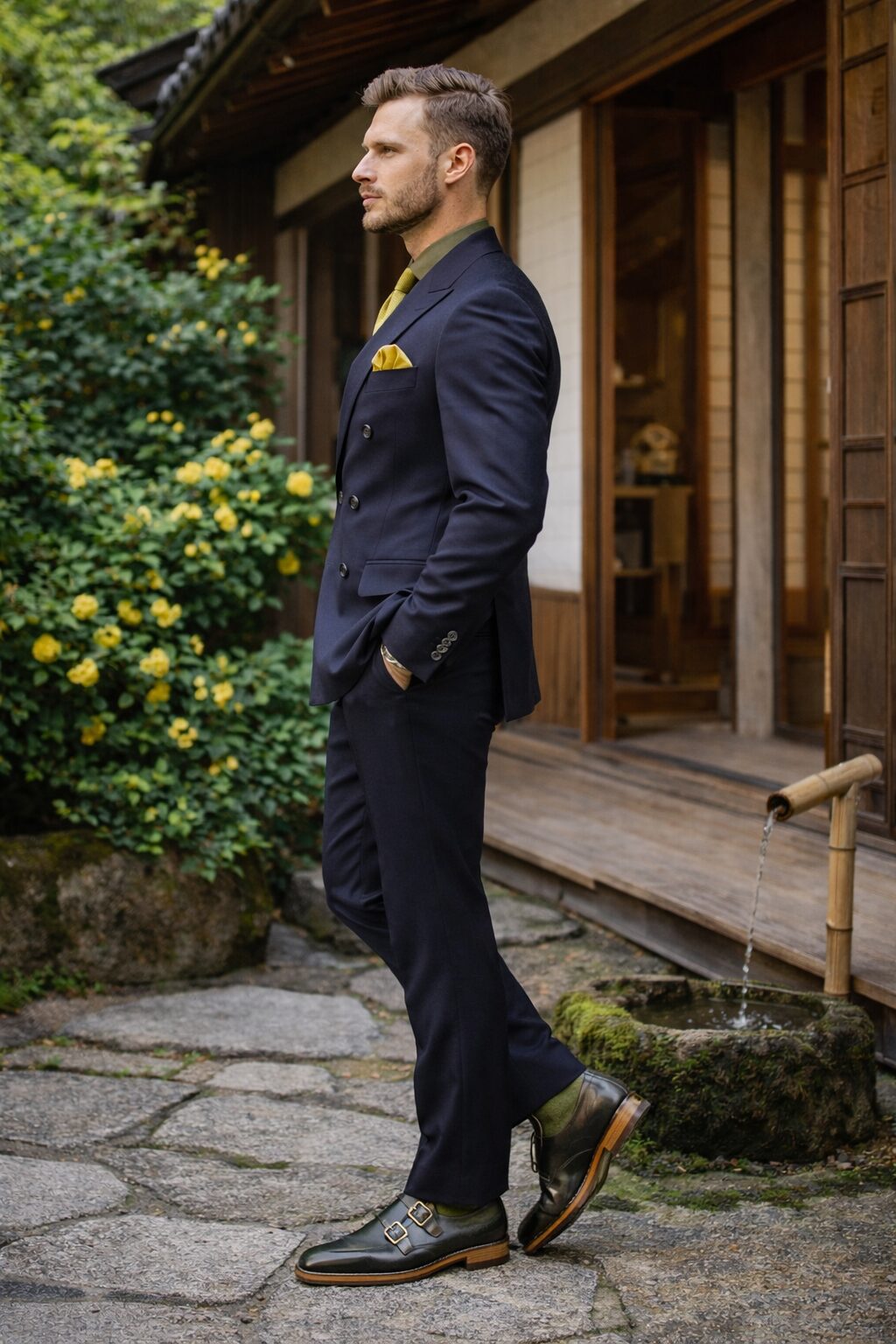
Yamabukikasane is not a single hue but a construction: a slightly red-tinged yamabuki yellow on the surface, and a soft green-inflected pale tone held underneath. Its identity emerges only through layering.
In this sense, the color translates spring’s progression itself—from flower to leaf—into chromatic form. It is not a snapshot, but a temporal continuum rendered as kasane no irome.
Palette
Color Composition
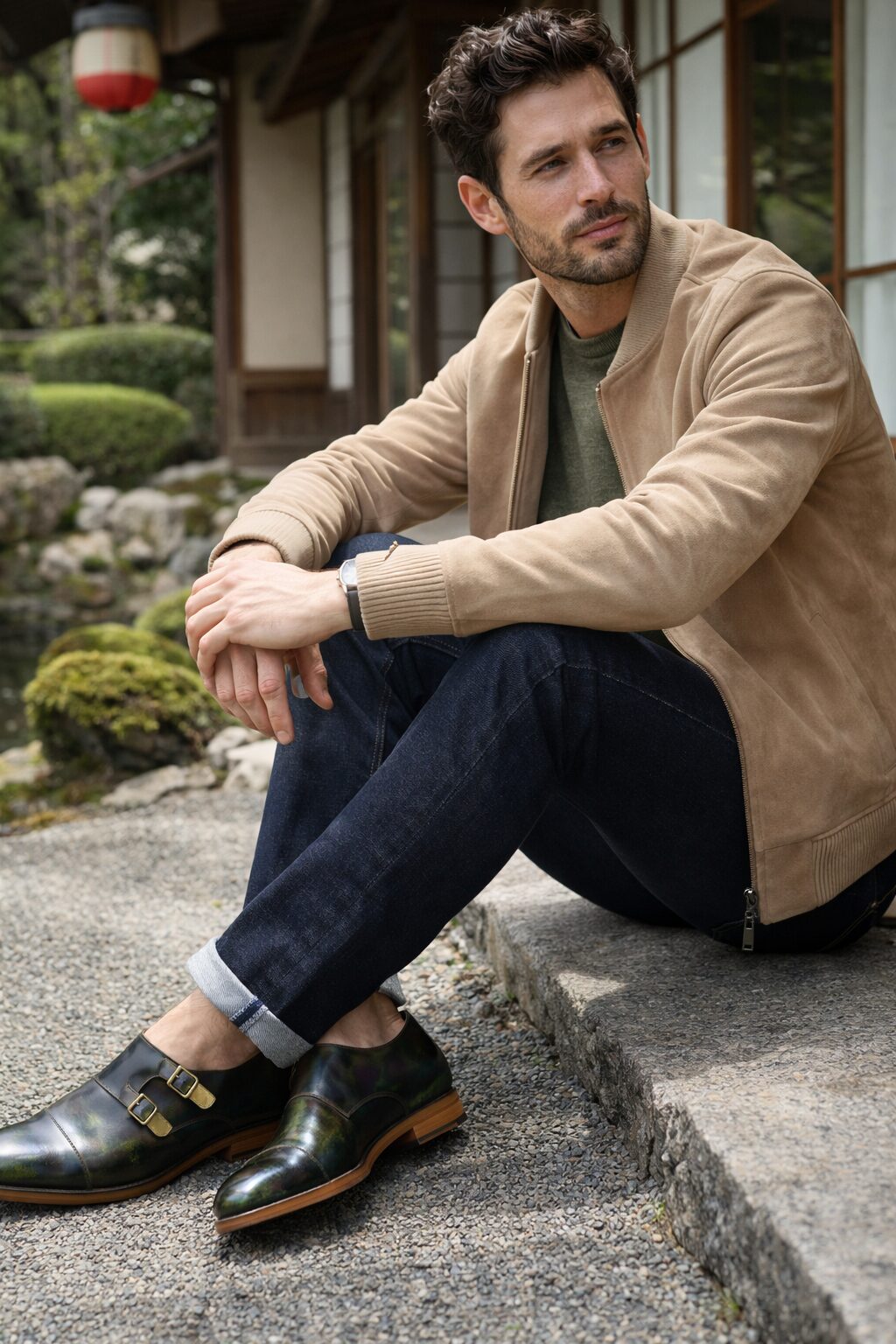
A softly luminous yellow with a hint of red. While radiant, it retains a sense of warmth and restraint, serving as the principal hue of spring.
The layers beneath introduce moegi and young-grass greens, which lend vitality and depth to the yamabuki yellow above.
Depending on the light, white or pale tones may come forward, softening the overall impression and preserving elegance and grace.
Time
Seasonal Depth — Variations of Transition in Yamabukikasane
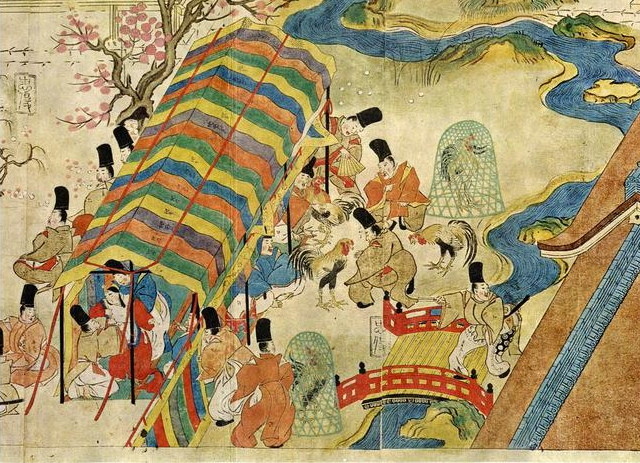
An illustration based on Japanese emaki (picture scrolls) depicting courtly life and attire from the Heian period.
Image referenced from publicly available web material.
In fact, Yamabukikasane encompasses variations that adjust color balance in accordance with the season’s progression. At the height of spring, when blossoms dominate the landscape, a version known as Hana-yamabuki emphasizes the yamabuki yellow on the surface. This variation expresses the brilliance of full bloom and the abundance of light.
As the flowers fall and young leaves take prominence, the palette transitions to Ha-yamabuki, in which the underlying green tones are strengthened. Here, the yellow becomes more subdued, highlighting the maturity and quietness of late spring.
In this way, Yamabukikasane is not a static color scheme, but one that breathes in harmony with the seasonal timeline. The fact that the color itself contains transition reveals the conceptual sophistication of kasane no irome.